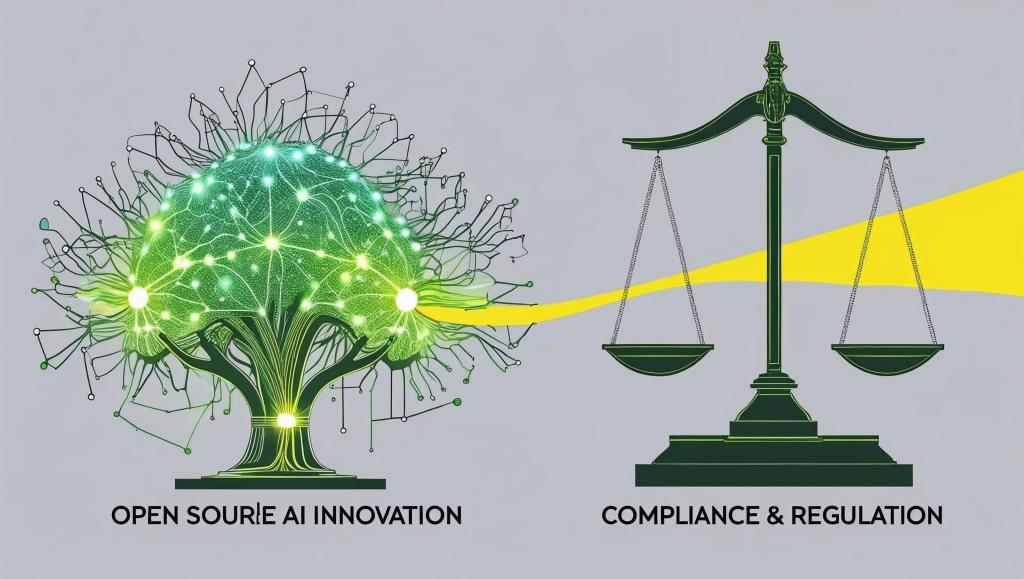
China has emerged as a global pioneer in artificial intelligence regulation, implementing the world’s first comprehensive framework specifically governing generative AI. Through the Interim Measures for the Management of Generative Artificial Intelligence Services, which took effect on August 15, 2023, China established a sophisticated regulatory approach that balances technological innovation with strict content control and data security.
This landmark legislation, issued by seven government agencies including the Cyberspace Administration of China (CAC), represents China’s strategic commitment to leading global AI governance. For business leaders worldwide, understanding this framework is essential, given China’s position as both a major AI innovator and a significant market.
A New Paradigm for AI Governance
China’s “Interim Measures for Generative AI” create a unique regulatory landscape. Unlike Western models, it prioritizes content control and ideological alignment, requiring a localized strategy for any business operating in the market.
Generative AI services approved
Source: CAC, as of March 2025
China’s approach differs markedly from Western models like the EU AI Act, prioritizing content moderation and ideological alignment alongside traditional concerns like privacy and safety. This guide breaks down the core components of China’s AI regulations and offers strategic recommendations for businesses operating in this tightly controlled digital environment.
The Regulatory Architecture: A Multi-Layered System
China’s AI governance system is built upon its foundational data laws and layered with AI-specific regulations.
The Regulatory Architecture: A Multi-Layered System
Foundational Laws
AI-Specific Regulations
Foundational Legal Framework
Three cornerstone laws provide the underlying legal architecture for all digital technologies in China:
- Data Security Law (DSL): Establishes requirements for data classification, protection, and cross-border transfers.
- Personal Information Protection Law (PIPL): China’s comprehensive privacy law, similar in scope to the GDPR, which governs how AI systems process personal information.
- Cybersecurity Law (CSL): Provides the fundamental framework for network security and compliance obligations that extend to AI infrastructure.
AI-Specific Regulations
China has implemented several overlapping regulations to create a comprehensive AI governance framework:
- Algorithm Recommendation Provisions (2022): Regulates recommendation algorithms, requiring transparency and user control.
- Deep Synthesis Provisions (2023): Governs “deepfake” and synthetic content, mandating content labeling and provider accountability.
- Generative AI Measures (2023): The flagship regulation targeting generative AI systems that offer services to the public in China.
The Generative AI Measures: Core Requirements
The Generative AI Measures apply to any entity providing generative AI services to the public within China. This excludes internal corporate AI systems not accessible to the public.
Core Requirements of the Generative AI Measures
Content & Ideology
Providers are directly responsible for AI-generated content.
- Content must reflect “core values of socialism.”
- Must prevent outputs that undermine state power or spread false information.
- Requires robust technical moderation (e.g., keyword filtering).
Data & Training
Strict standards apply to the data used to train AI models.
- Training data must have legitimate sources and respect IP laws.
- Data must be accurate, truthful, objective, and diverse.
- Requires explicit consent to use personal information in training sets.
Content Management and Ideological Compliance
This is the most distinctive feature of China’s AI regulation. Service providers have a direct responsibility for the content their AI generates.
Mandatory Content Requirements:
- Generated content must “reflect the core values of socialism.”
- AI outputs must prevent the generation of content that undermines state power, promotes ethnic hatred, spreads false information, or violates public order.
Technical Implementation: Providers must implement robust technical measures, including keyword filtering and content moderation algorithms, to prevent the generation of prohibited content.
Data and Training Requirements
The regulation establishes strict standards for the data used to train AI models:
- Legitimate Sources: All training data must have legitimate sources and comply with intellectual property laws.
- Data Quality: Data must meet requirements for accuracy, truthfulness, objectivity, and diversity.
- Personal Information: Explicit consent is required if personal information is used in training datasets, aligning with PIPL.
Registration and Filing Requirements
China operates a unique system of registration and assessment for AI services that have “public opinion attributes” or “social mobilization capabilities.”
The Algorithm Filing System
Providers of these high-impact AI services must register their algorithms with the state. The official algorithm filing system requires companies to submit comprehensive documentation, including:
- Detailed algorithm descriptions and technical specifications.
- Information on data sources and processing methodologies.
- Risk assessment reports and mitigation measures.
Registration and Filing Requirements
Algorithm Filing & Security Assessments
AI services with “public opinion attributes” or “social mobilization capabilities” must undergo a two-step approval process:
- Algorithm Filing: Submit comprehensive technical documentation, data sources, and risk assessments to the national filing system.
- Security Assessment: Undergo a review covering technical security, ideological alignment, and discrimination prevention.
Source: China’s National Algorithm Filing System
Security Assessments
Before public deployment, high-impact AI systems must also undergo a comprehensive security assessment. This review covers not only technical security but also ideological alignment, discrimination prevention, and the protection of individual rights.
As of March 2025, China has approved 346 generative AI services under this system, demonstrating that compliance is achievable for well-prepared organizations.
Strategic Recommendations for Business Leaders
Navigating China’s AI regulatory landscape requires a proactive and localized approach.
Strategic Recommendations for Leaders
Immediate Actions
1. Assess Impact: Determine which regulations apply to your AI.
2. Build Content Moderation: Implement systems to meet ideological rules.
3. Prepare Documentation: Ready your algorithm and data records for filing.
4. Engage Local Experts: Retain Chinese legal and regulatory counsel.
Medium-Term Strategy
5. Develop for China: Consider dedicated AI services for the market.
6. Evaluate Partnerships: Partner with local firms for expertise.
7. Build Gov’t Relations: Stay informed on policy developments.
Long-Term Positioning
8. Invest in Compliance Tech: Automate moderation and reporting.
9. Lead in Industry: Engage in standard-setting bodies.
10. Integrate Globally: Develop a scalable global compliance framework.
Immediate Compliance Actions
- Conduct a Regulatory Impact Assessment: Evaluate all your AI systems to determine if they fall under the scope of China’s generative AI, algorithm recommendation, or deep synthesis regulations.
- Implement Robust Content Management Systems: Develop or procure content moderation capabilities that can meet China’s strict ideological requirements.
- Prepare for Filing and Documentation: Establish comprehensive documentation systems for your AI algorithms and training data to support the filing and security assessment processes.
- Engage Local Expertise: Retain qualified Chinese legal counsel and regulatory experts with specific experience in AI compliance.
Medium-Term Strategic Planning
- Consider China-Specific AI Development: It may be necessary to develop dedicated AI services for the Chinese market that incorporate regulatory requirements from the design phase.
- Evaluate Local Partnerships: Partnering with domestic Chinese AI companies can provide invaluable regulatory expertise and local market knowledge.
- Establish a Government Relations Program: Build relationships with relevant regulatory authorities and industry associations to stay informed of policy developments.
Long-Term Strategic Positioning
- Invest in Compliance Technology: Develop or invest in compliance automation tools and advanced content moderation systems that can scale with your business.
- Participate in Industry Leadership: Engage in industry associations and standard-setting bodies to help shape policy and demonstrate your commitment to responsible AI.
- Integrate Global Compliance Frameworks: While distinct, China’s framework shares common ground with other regulations like Canada’s proposed AIDA. Develop a scalable global compliance framework that can accommodate Chinese requirements alongside those of other major markets.
A New Paradigm for AI Governance
China’s comprehensive AI regulatory framework represents a groundbreaking approach, establishing the world’s first systematic regulation of generative AI. Its focus on content control and ideological alignment sets it apart from Western models and presents unique challenges and opportunities for global businesses.
Success in this environment demands substantial investment in compliance infrastructure, local expertise, and continuous adaptation. For organizations prepared to meet these rigorous standards, the rewards of accessing one of the world’s largest and most advanced AI markets are significant. By understanding and strategically navigating this framework, business leaders can turn a complex regulatory challenge into a source of sustainable competitive advantage.