
Introduction
In the age of information, data is undeniably the pulsating heart of transformative technologies. According to a 2020 report by IDC, the world’s data volume is set to rocket up to 175 zettabytes by 2025, marking a colossal surge from the 33 zettabytes recorded in 2018. This exponential growth has ushered in the era of Data-Centric AI development, a cutting-edge approach that places data at the helm of artificial intelligence systems. With industries from healthcare to finance standing on the brink of AI-driven revolution, leveraging this data-centric approach is more than a mere technological trend—it is a strategic imperative. This article delves into the significance of Data-Centric AI, illuminating its transformative potential and the profound impact it is poised to cast on various sectors.
The Role of Data in AI Development
Data plays a pivotal role in the development and functioning of AI systems. Traditionally, AI systems are trained on massive datasets, learning to identify patterns, make predictions, and perform tasks by analyzing this data. For instance, facial recognition programs learn to identify different objects or animals by analyzing thousands of images; autonomous vehicle systems learn to navigate by reviewing thousands of hours of video and sensor data.
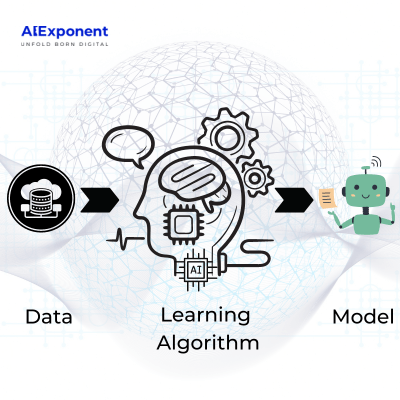
However, the intrinsic value of data is not merely in its volume. The quality, relevance, and consistency of the data are equally, if not more, important. Data quality directly impacts the accuracy and reliability of AI systems. Therefore, the focus should shift from the sheer volume of data to the systematic engineering and management of quality data.
Traditional AI Development Process
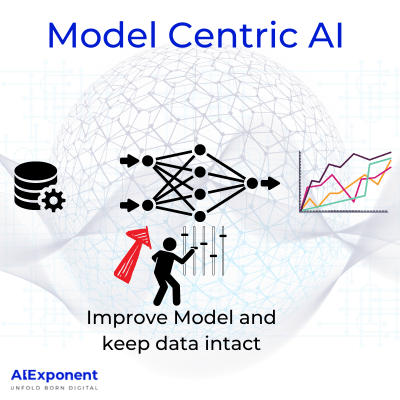
The traditional AI development process primarily focuses on building and refining AI models. AI researchers and developers invest significant time and resources into fine-tuning model architectures and algorithms. The following are the common approaches used:
- Model / Network Selection
- Parameter tuning
- Using ensembling
The data used to train these models is often seen as secondary, and its quality, relevance, and consistency are not always prioritized.
Issues with Traditional Model Building
Traditional Model Centric approach to AI development has several limitations. It often leads to the creation of AI models that, despite being sophisticated and powerful, fail to deliver trustworthy results when deployed in real-world scenarios.
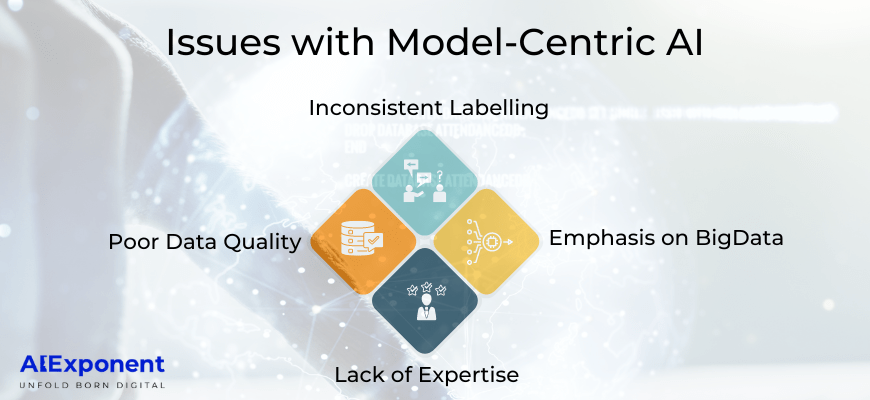
Let’s examine the reasons why model-centric AI fails to produce the expected results:
Poor Data Quality
Model-centric AI often prioritizes improving the model’s architecture while overlooking data quality. Inaccurate or inconsistent data can lead to flawed predictions, as seen in a machine learning model for customer churn prediction when fed with noisy or inconsistent data.
Inconsistent Labeling
Another challenge is the inconsistent labeling of data. Individuals may label features or patterns differently, creating confusion and ambiguity for AI systems.
Overemphasis on Big Data
The belief that more data is always better doesn’t hold for all industries, especially those with limited data. In many cases, smaller quantities of high-quality data can be equally or more effective.
Lack of Expertise
Building an effective model-centric AI system requires a deep understanding of algorithms and the problem domain. Without this expertise, misinterpreting model outputs, choosing inappropriate models, or improperly applying techniques can lead to subpar performance and inaccuracies.
What Data-Centric Approach can do?
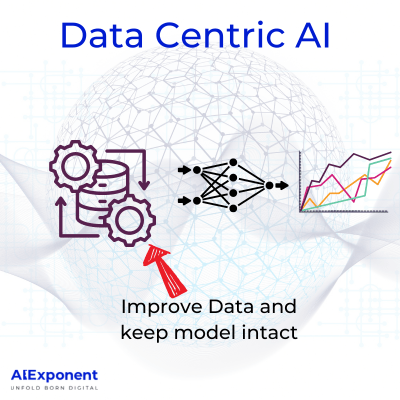
Given the limitations of the traditional, model-centric approach, it is vital to adopt a data-centric approach to AI development. Data-centric AI emphasizes the systematic engineering and management of data, ensuring that the data used to train AI systems is of high quality, relevant, and consistently labeled.
Adopting a data-centric approach can help mitigate many of the issues associated with the traditional approach. By focusing on improving data quality and consistency, AI developers can significantly enhance the performance and trustworthiness of their AI systems.
Moreover, a data-centric approach can make AI benefits more accessible to most companies, even those with limited access to large volumes of data. It can help industries such as healthcare, manufacturing, and government technology unlock the value of AI by enabling them to build custom AI systems based on their specific data.
Benefits of data-centric development
Here are the benefits of Data-Centric AI Development:
- Improved Model Performance: By focusing on the quality and relevance of data, companies can build more accurate and efficient AI systems.
- Increased Collaboration: Data-centric AI promotes collaboration. It allows quality managers, subject matter experts, and developers to work together during the development process. They can reach a consensus on defects and labels, build a model, analyze results, and make further optimizations.
- Faster Development time: With a data-centric approach, teams can work in parallel and directly influence the data used for the AI system. This eliminates unnecessary back-and-forths among groups and speeds up the development process.
- Implementing Data Standards: the data-centric approach enables teams to develop consistent methods for collecting, labeling, and training data. They can learn from past projects and quickly scale new ones, leading to more efficient and effective AI development.
Real-World Applications and Case Studies
- LendingLens: Data-Centric AI has been successfully applied in various industries. For instance, LandingLens, a leading Data Centric AI Computer Vision software platform, helps improve product quality by enhancing inspection accuracy and reducing false rejections.
- Common Voice project by Mozilla collects voice samples from community volunteers to create a publicly available dataset for an open-source voice recognition project. This project underscores the potential of crowdsourcing datasets for AI, involving the community in the creation of datasets and making AI more representative, reliable, and trustworthy.

Implications for Businesses and Industries
The shift towards Data Centric AI has significant implications for businesses and industries. It represents a new paradigm in AI development, one that emphasizes the importance of high-quality, relevant, and consistently labeled data.
By adopting a data-centric approach, companies can unlock the full potential of AI. They can build more accurate, efficient, and reliable AI systems, leading to improved products, services, and customer experiences. Moreover, they can leverage the power of AI to gain a competitive edge, drive innovation, and achieve business success.
Conclusion
The time for Data Centric AI has arrived. As AI continues to evolve and mature, the focus needs to shift from the models and algorithms to the data that fuels these systems. By adopting a data-centric approach, companies can unlock the full potential of AI, improving their products, enhancing their services, and driving their success. With the right tools, practices, and mindset, Data Centric AI can revolutionize AI development and outcomes, making it a game-changer in the world of AI.