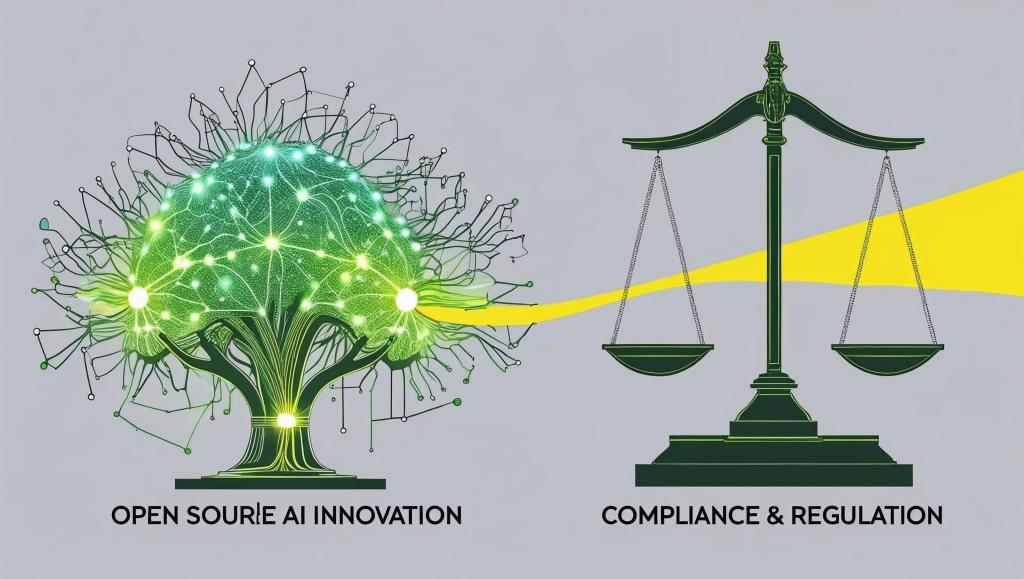
While many frameworks offer guidance on artificial intelligence, the UNESCO Recommendation on the Ethics of Artificial Intelligence stands apart. Adopted by all 193 member states in November 2021, it is the first-ever global standard-setting instrument for AI ethics. This isn’t just another set of suggestions; it’s a comprehensive blueprint designed to anchor AI development in human rights, dignity, and environmental sustainability. You can read the full text on the official UNESCO website.
For business leaders and AI practitioners, the UNESCO Recommendation is more than an academic document. It’s a critical resource that signals the global consensus on AI governance and provides an actionable framework for building systems that are not only innovative but also fundamentally ethical. As nations begin to align their policies with these standards, understanding this ethical AI framework is essential for future-proofing your operations and demonstrating a credible commitment to responsible AI.
The First Global Standard
Adopted by all 193 member states, the UNESCO Recommendation is the world’s first global standard-setting instrument for AI ethics. It provides a comprehensive framework of values, principles, and actions to ensure AI is developed in a way that respects human rights, promotes sustainability, and benefits all of humanity.
Member States United
This guide will provide a detailed breakdown of the UNESCO Recommendation, exploring its core values, foundational principles, and practical policy action areas that set it apart from other frameworks.
Why the UNESCO Recommendation Matters for Your Business
The UNESCO Recommendation moves beyond high-level principles to offer a holistic and actionable approach. Here’s why it deserves your attention:
- It Sets the Global Standard: As a unanimously adopted framework, it represents the most authoritative global consensus on AI ethics, heavily influencing future international and national regulations.
- It Provides a Comprehensive Risk Framework: The Recommendation’s emphasis on Ethical Impact Assessments (EIA) and due diligence provides a practical model for identifying, assessing, and mitigating risks throughout the entire AI lifecycle.
- It Focuses on Action, Not Just Principles: Its detailed Policy Action Areas offer concrete guidance on everything from data governance and gender equality to environmental impact, making it a practical tool for corporate strategy.
- It Builds Deep Stakeholder Trust: Adhering to a framework that champions human rights, transparency, and accountability builds profound trust with customers, employees, and regulators, creating a strong competitive advantage.
The Three-Tiered Structure of the Recommendation
The framework is logically structured to guide stakeholders from broad values to specific actions:
- The Four Core Values: The “why.” The foundational ethical pillars that anchor the entire framework.
- The Ten Foundational Principles: The “what.” The specific, non-negotiable rules that AI systems should follow.
- The Eleven Policy Action Areas: The “how.” The practical domains where values and principles must be translated into concrete action and policy.
A Three-Tiered Structure for Action
Core Values
The “Why”
Principles
The “What”
Policy Areas
The “How”
The Four Core Values: The Ethical Foundation
The Recommendation is built upon four overarching values that serve as its ethical compass.
- Respect, Protection, and Promotion of Human Rights, Fundamental Freedoms, and Human Dignity: This is the cornerstone. It asserts that AI must serve humanity, and human rights are non-negotiable.
- Environment and Ecosystem Flourishing: AI systems should not harm the environment. Their entire lifecycle, from development to deployment and disposal, must be sustainable and ecologically responsible.
- Ensuring Diversity and Inclusiveness: The framework demands that AI actively promotes diversity and inclusion, ensuring that benefits are shared by all and that systems do not perpetuate or exacerbate discriminatory biases.
- Living in Peaceful, Just, and Interconnected Societies: AI should be a tool for unity and peace, not one that fuels division, spreads misinformation, or threatens democratic processes.
The Four Core Values: The Ethical Foundation
Human Rights & Dignity
Ensuring AI serves humanity and that fundamental rights are non-negotiable.
Environment Flourishing
Committing to sustainable and ecologically responsible AI lifecycles.
Diversity & Inclusiveness
Promoting shared benefits for all and actively eliminating discriminatory bias.
Peaceful & Just Societies
Using AI as a tool for unity and democratic values, not division or misinformation.
The Ten Foundational Principles: The Rules of Engagement
These ten principles translate the core values into more specific guidance for AI actors.
- Proportionality and Do No Harm: The use of AI must be appropriate for the stated goal and should not go beyond what is necessary to achieve it.
- Safety and Security: AI systems must be reliable, secure, and protected from vulnerabilities that could cause harm.
- Fairness and Non-discrimination: AI systems must be designed and used to avoid biased outcomes and promote social justice and fairness.
- Sustainability: The societal, cultural, economic, and environmental impacts of AI must be holistically assessed and managed for sustainability.
- Right to Privacy and Data Protection: A crucial principle that calls for robust data governance and protection throughout the AI lifecycle, in line with international law.
- Human Oversight and Determination: Humans must always remain in control and retain the ability to question, override, or shut down an AI system. Ultimate responsibility lies with people, not machines.
- Transparency and Explainability: Stakeholders have a right to know when they are interacting with an AI system and to be provided with understandable explanations for AI-driven decisions that affect them.
- Responsibility and Accountability: Clear accountability mechanisms must be in place. AI actors are responsible for the outcomes of their systems.
- Awareness and Literacy: Promoting public understanding of AI technologies and data is essential for enabling meaningful public participation and scrutiny.
- Multi-stakeholder and Adaptive Governance and Collaboration: AI governance must be inclusive, involving governments, the private sector, academia, and civil society, and it must be flexible enough to adapt to new technological developments.
The Ten Foundational Principles
These principles translate the core values into specific rules. The chart below visualizes the relative implementation focus required for each, highlighting areas needing the most attention from businesses and developers.
Source: UNESCO Recommendation on the Ethics of AI
A Clear Red Line: The Ban on Social Scoring and Mass Surveillance
A standout feature of the UNESCO Recommendation is its explicit provision against using AI systems for social scoring and mass surveillance. This is a powerful statement that sets a clear boundary, emphasizing that certain applications of AI are fundamentally incompatible with human rights.
From Principles to Practice: The Policy Action Areas
This is where the UNESCO Recommendation truly becomes an actionable guide for businesses. It outlines eleven specific policy areas where the values and principles must be applied. For businesses, the most critical areas include:
- Policy Area 1: Ethical Impact Assessment (EIA): The Recommendation calls for organizations to conduct EIAs to proactively identify the potential impact of their AI systems on human rights, the environment, and the core values. This moves beyond simple technical testing to a holistic ethical review, similar in spirit to the impact assessments required by the EU AI Act.
- Policy Area 3: Data Policy: It advocates for data governance strategies that go beyond privacy compliance to include measures for data quality, security, and the right for users to control their data. This includes promoting open data initiatives where appropriate, while always safeguarding personal information.
- Policy Area 6: Gender: This calls for concrete action to overcome the gender gap in the AI industry. Businesses are encouraged to ensure fair representation of all genders on design teams, invest in STEM education for women and girls, and actively audit algorithms for gender bias.
- Policy Area 7: Environment and Ecosystems: Organizations are urged to assess and mitigate the direct and indirect environmental impact of their AI systems, from the energy consumption of data centers to the carbon footprint of hardware manufacturing.
Key Policy Action Areas for Business
-
Ethical Impact Assessment (EIA)
Proactively identify and mitigate risks to human rights and the environment.
-
Data Policy & Governance
Ensure data quality, security, and user control beyond basic compliance.
-
Gender Equality
Actively work to overcome the gender gap and audit algorithms for bias.
-
Environment & Ecosystems
Assess and reduce the carbon footprint of AI systems and hardware.
Source: UNESCO Recommendation on the Ethics of AI
Conclusion: A Strategic Guide for a New Era of AI
The UNESCO Recommendation on the Ethics of Artificial Intelligence is more than a set of guidelines; it’s a global call to action. It provides businesses and developers with a comprehensive, rights-based framework to navigate the complexities of AI development responsibly.
By embracing its values, implementing its principles, and taking action in the key policy areas, your organization can do more than just comply with future regulations. You can build deeper trust, manage risk more effectively, and position yourself as a true leader in the creation of a more equitable, sustainable, and prosperous future powered by ethical AI.