Artificial intelligence (AI) has evolved from a futuristic concept into an integral part of forward-looking business strategies. Across industries, organizations are experimenting with AI pilots that promise to redefine customer service, streamline supply chains, and enhance decision-making. Yet, despite the momentum and initial successes at the pilot stage, few companies have managed to integrate AI at scale. Why does this gap persist?
Analysts and industry experts suggest that while technical complexities play a role, the more pressing obstacles are often organizational and cultural. Siloed operations, hierarchical decision-making, and an entrenched fear of failure frequently impede the widespread adoption of AI. Overcoming these barriers requires a holistic approach that addresses not only technology, but also the underlying structures and mindsets shaping the enterprise.
The Promise vs. Reality
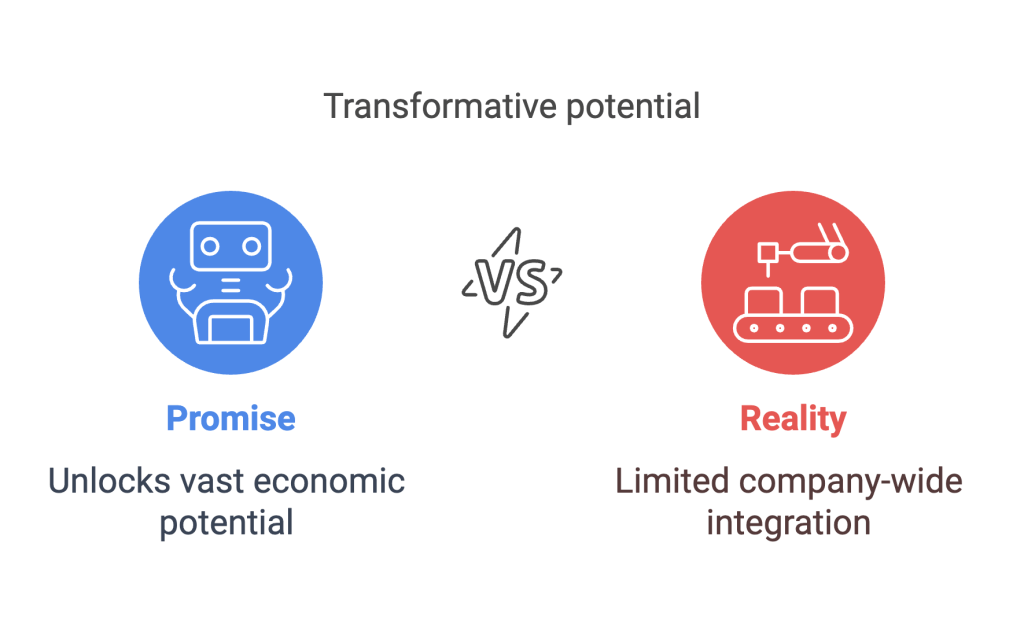
AI technologies have advanced rapidly, becoming more accessible and affordable. Machine learning algorithms can now analyze vast datasets to uncover insights that were previously unattainable. Companies recognize the transformative potential of AI; a report by McKinsey & Company estimates that AI could add $15.5 trillion to $22.9 trillion annually by 2040 to the global economy.
Yet this optimism contrasts sharply with current practices: according to the Harvard research, only around 8% of companies engage in the core practices necessary for extensive AI adoption. While many firms run successful pilots in isolated pockets, they struggle to extend these solutions into company-wide platforms that continuously deliver value.
Organizational Silos and the Need for Collaboration
One frequently cited challenge lies within organizational silos. AI thrives on cross-functional insights, drawing from data spanning various departments. However, in many companies, communication across business units remains limited, stalling AI’s potential to drive holistic transformation.
I recall working with a fintech company that had implemented an AI system to predict frauds. The business team saw impressive results during the pilot. However, when attempting to scale the solution, they hit a roadblock, the operations team was not involved in the pilot and was resistant to changing their workflows. The lack of collaboration between departments prevented the AI system from being adopted company-wide.

Insights from MIT Sloan Management emphasizes the importance of cross-functional teams in AI projects. By bringing together experts from different domains; data scientists, engineers, business analysts, and frontline employees; companies can ensure that AI initiatives align with organizational goals and are practically implementable.
From Hierarchies to Data-Driven Decision-Making
Traditional decision-making hierarchies can stifle the agility required for AI adoption. In many organizations, decisions flow from the top down, with leaders relying on experience and intuition. AI, however, demands a shift towards data-driven decision-making at all levels.
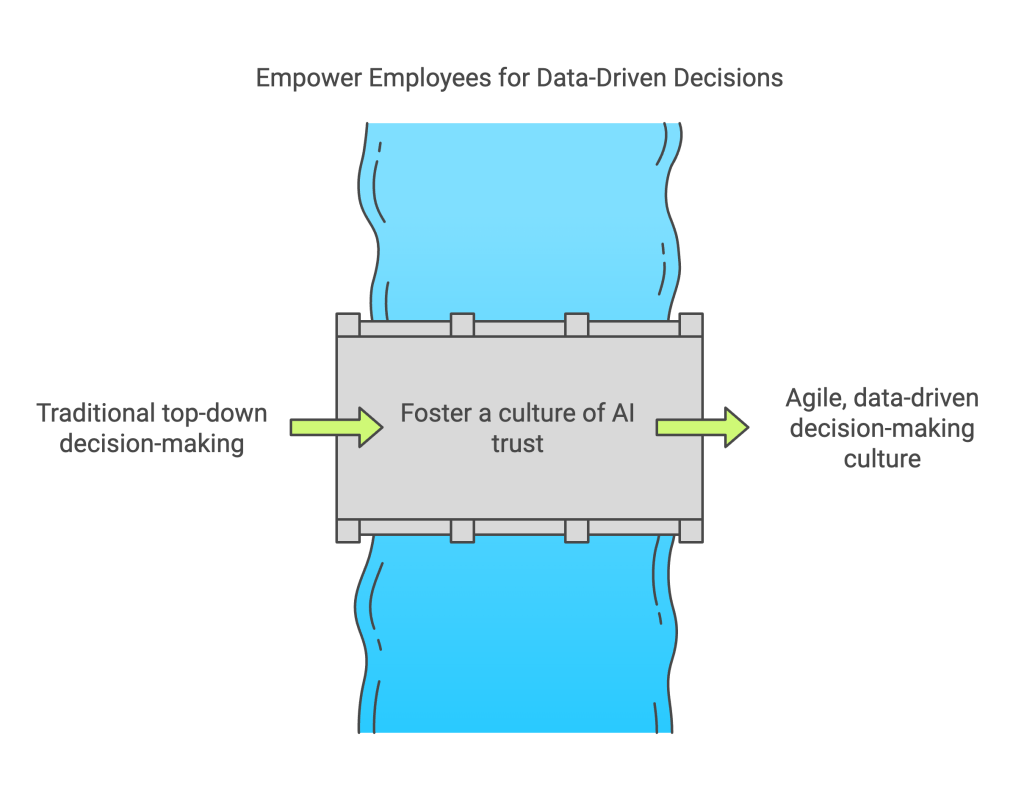
Consider a financial services firm where loan approvals were historically based on the judgments of senior managers. An AI model was developed to assess credit risk more accurately with explainability in place. Yet, frontline employees were hesitant to trust the AI recommendations without managerial approval. The ingrained hierarchy slowed down the decision-making process, negating the efficiency gains offered by AI.
Creating a data-driven culture requires empowering employees to make decisions based on AI insights. This shift can be challenging, as it involves redefining roles and responsibilities. Leaders must demonstrate trust in AI tools and encourage their teams to do the same.
Risk Aversion and the Fear of Failure
Innovation inherently involves risk, and AI projects are no exception. However, many organizations have a low tolerance for failure, which hampers experimentation and learning—both critical components of successful AI implementation.
In one organization I consulted for, a failed AI project led to budget cuts and a halt on future AI initiatives. The project’s failure was due to unrealistic expectations and inadequate resources, but instead of learning from the experience, the company became more risk-averse.
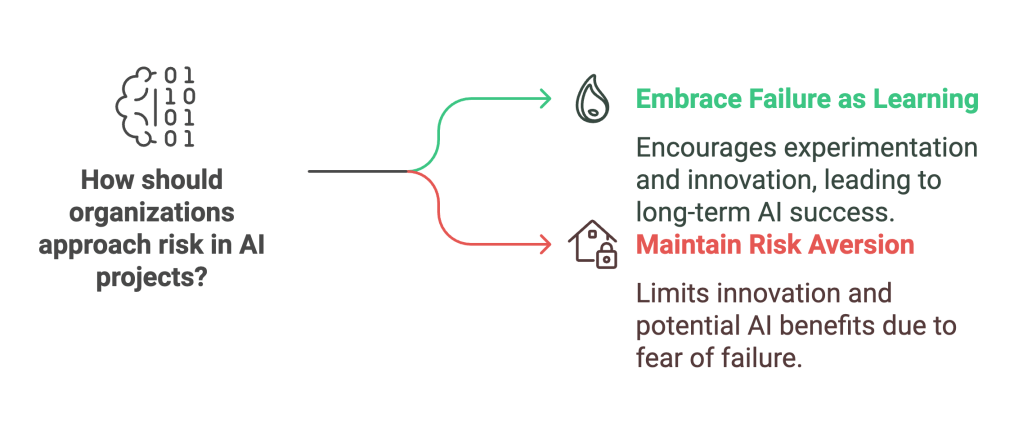
To overcome this barrier, companies must cultivate a culture that views failures as learning opportunities. Implementing AI is a journey filled with iterations and improvements. Research from Stanford University underscores the importance of a “fail fast, learn faster” mentality. Those willing to experiment and iterate are more likely to realize AI’s full potential in the long term.
Bridging the Skills Gap and Developing Talent
The shortage of professionals who can bridge technical expertise with business acumen remains a key obstacle. Data scientists may excel at building models but struggle to contextualize them within the company’s strategic goals. Business leaders, conversely, may lack a nuanced understanding of AI’s capabilities and constraints.
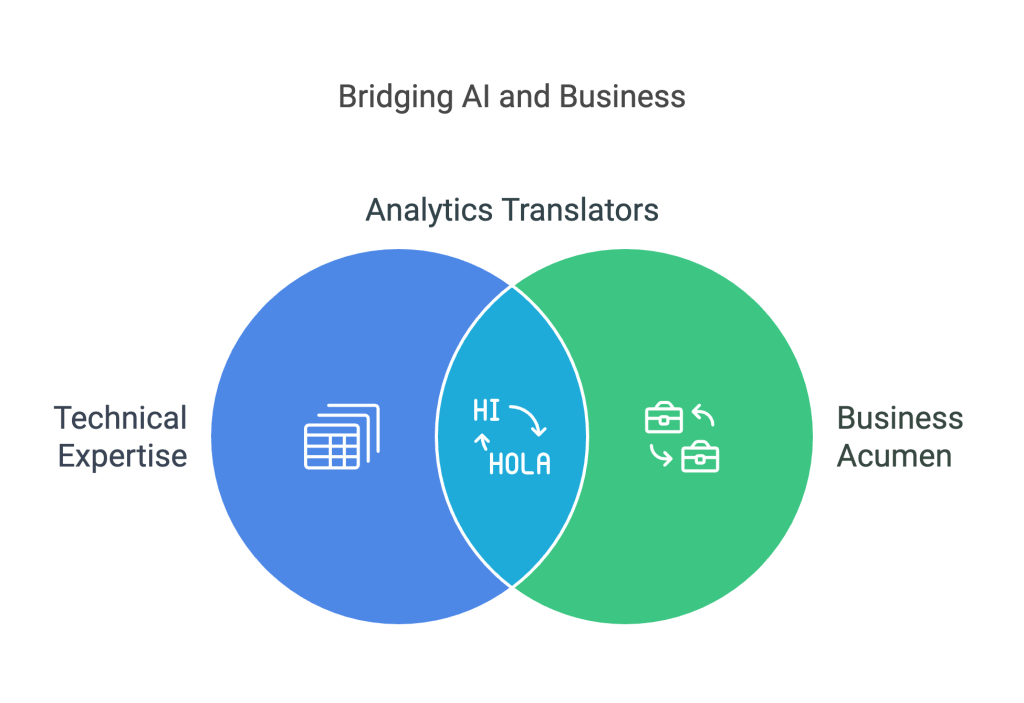
Organizations are increasingly recognizing the value of “analytics translators”—individuals who understand both the language of data and the broader business context. A retail company, for instance, invested in training programs to upskill employees across departments, encouraging a shared understanding of AI and ensuring that solutions could be seamlessly integrated into existing processes.
Strategies for Sustainable AI Integration
Experts suggest several approaches to overcoming these entrenched barriers:
- Foster Interdisciplinary Teams: Encourage collaboration across departments by forming teams that include members from IT, operations, marketing, and other relevant areas. This approach ensures that AI initiatives are holistic and address real business challenges.
- Redefine Leadership Roles: Leaders should model data-driven decision-making and empower employees to use AI insights. Flattening hierarchies can accelerate decision processes and promote innovation.
- Cultivate a Culture of Experimentation: Embrace a mindset where calculated risks are accepted, and failures are viewed as opportunities to learn. This shift can unlock creativity and lead to more successful AI implementations.
- Invest in Talent Development: Provide training and development programs to build AI literacy across the organization. Developing internal capabilities reduces reliance on external vendors and embeds AI into the company’s DNA.
- Align AI Initiatives with Business Strategy: Ensure that AI projects are directly linked to strategic objectives. This alignment increases the relevance of AI solutions and secures buy-in from stakeholders.

Toward Full-Scale AI Transformation
Scaling AI is not merely a technological endeavor; it’s a transformative process that reshapes organizational structures and cultures. By addressing the barriers of siloed operations, hierarchical decision-making, and risk aversion, companies can move beyond pilots and integrate AI into the fabric of their business.
This path requires sustained commitment from leadership and participation across the enterprise. In the end, success lies in cultivating an organizational environment where AI is not confined to a single department but embraced as a strategic tool empowering employees at all levels. As organizations learn to navigate these challenges, the true promise of AI—boosting competitiveness, driving innovation, and reshaping entire industries—becomes not just possible, but inevitable.